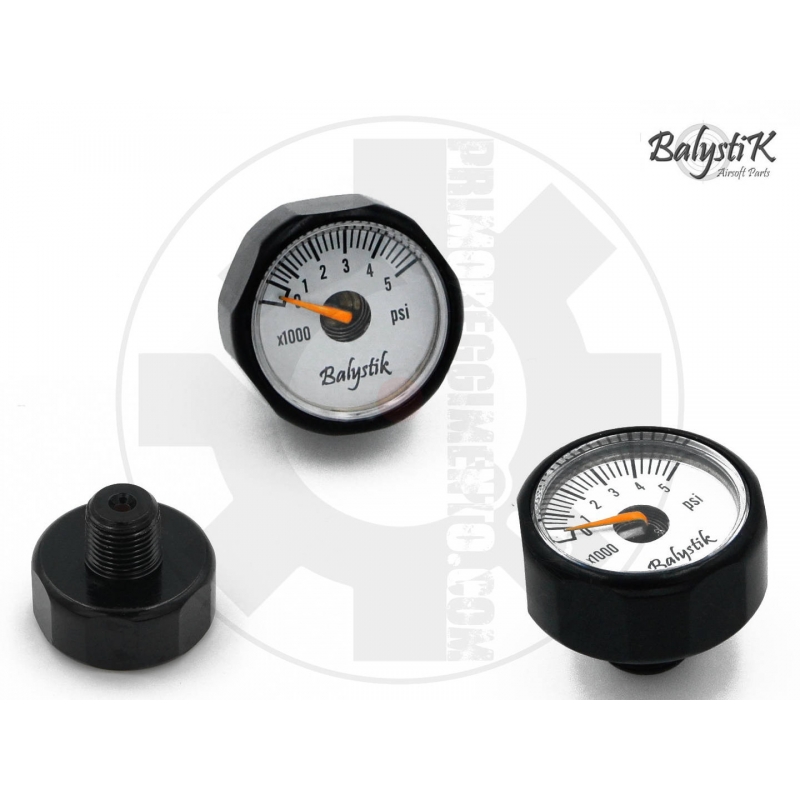
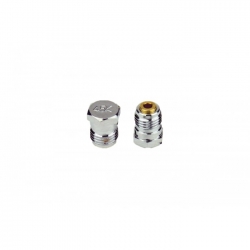
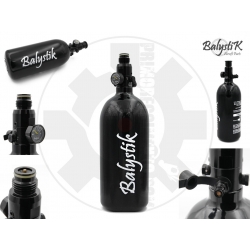
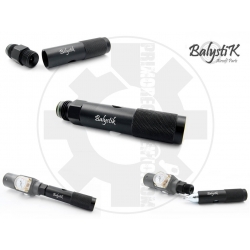
Se stai usando un setup HPA e vuoi tenere sotto controllo la pressione della tua bombola con un indicatore compatto ma ben leggibile, il micro gauge Balystik 0–5000 PSI è una soluzione semplice e pulita: dimensioni ridotte (perfette anche su regolatori/valvole “affollate”), filettatura standard 1/8 NPT maschio, e range adatto a coprire sia bombole 3000 PSI che configurazioni più spinte (il quadrante arriva a 5000 PSI).
Caratteristiche principali • Scala 0–5000 PSI (micro manometro ad alta pressione) • Filettatura 1/8 NPT maschio (standard molto diffuso nel mondo HPA) • Diametro esterno 25 mm: super compatto, ideale come ricambio o upgrade • Confezione protettiva con foam: arriva ben imballato, pronto da montare • Indicazione del produttore: montaggio da parte di personale qualificato
Utilizzo (airsoft / HPA)
Perfetto come: • ricambio di un manometro danneggiato o impreciso • upgrade per avere un indicatore più “micro” e meno esposto a urti • componente per chi vuole un setup ordinato e funzionale, in stile “operativo” (il mondo HPA è trasversale: lo trovi su build e team un po’ ovunque, Italia/Europa inclusa).
Specifiche tecniche • Tipo: Micro pressure gauge • Range: 0–5000 PSI • Filettatura: 1/8 NPT maschio • Diametro esterno: 25 mm • Packaging: singolo prodotto, in scatola protettiva
Compatibilità • Compatibile con componenti che prevedono porta femmina 1/8 NPT. • Il prodotto viene indicato come adatto a bombole 3000 PSI; grazie al range 0–5000 PSI può leggere pressioni superiori (es. 4500 PSI) se l’hardware su cui lo monti è progettato per quelle pressioni.
Perché sceglierlo
Perché è un ricambio/upgrade piccolo, standard e pratico: ti rimette subito in pista quando il manometro originale fa le bizze, senza aggiungere ingombri inutili al tuo impianto HPA.
Nota sicurezza: su componenti alta pressione non si scherza: installazione e verifica tenuta solo da personale competente/attrezzato.
-----
Always :
Keep the thread and inside of your tank away from oil, dirt or other contaminants. Make sure your tank has not passed the re-test date. Bottles must be inspected and hydrostatically tested as follows: Aluminum tank : every 10 years. Composite tank : every 5 years (composite bottles have a maximum life of 15 years from the first hydrostatic test) Keep the outside of your bottle clean and use only mild or neutral detergent when necessary. Make sure the bottle is completely dry after cleaning. Store in a dry, cool and adequately ventilated place. Have your bottle serviced by a qualified person only. Make sure all accessories in the bottle are serviced, reviewed, inspected and handled in strict accordance with the manufacturer's instructions. Have the cylinder checked or hydrostatically retested if it shows signs of corrosion, holes or dents, if it has been damaged by heat, a fall, or other. Make sure there is no leak before each job. In the event that a leak is detected, the tank must not be refilled under any circumstances. Check that the cylinder to be filled with air has a working pressure (PW) engraved on the crown (for all aluminum bottles) or printed on the label (for all composite bottles) which should not be exceeded by the filling apparatus. Fill compressed air to less than 40 bar (600 psi) per minute at the service pressure (PW) indicated on the cylinder. Never :
Modify or darken the markings on the bottle. Let your bottle roll during your travels. Drop, knock or heat your bottle. Expose your bottle to excessive heat (> 50 ° C). Attempt to change the thread or force a valve inside the bottle. Attempt to remove metal from the bottle by any means, as this will render the cylinder unsuitable for its nominal pressure. Modify your bottle by adding additional openings for gauges or filling tips. Repaint the bottle with paints that require high temperature cooking. Only use air-drying paints. Do not use caustic paint strippers or corrosive cleaners as they will damage the bottle. Use the bottle for something other than its intended use. Request that the bottle be filled beyond its nominal capacity. An overflow is dangerous. Use or have your bottle filled if it leaks or if you suspect it is damaged. In this case, refer the bottle to an authorized specialist for a detailed visual inspection. Fill a bottle that has exceeded its date of inspection and periodic retest. Change your bottle in any way or add unauthorized accessories. Unauthorized modifications are illegal and could make the bottle unsafe. Never fill a bottle of compressed air with Co2, you would put yourself in serious danger. The airpacks we ship are empty, we do not have the right to ship pressurized tanks with compressed air